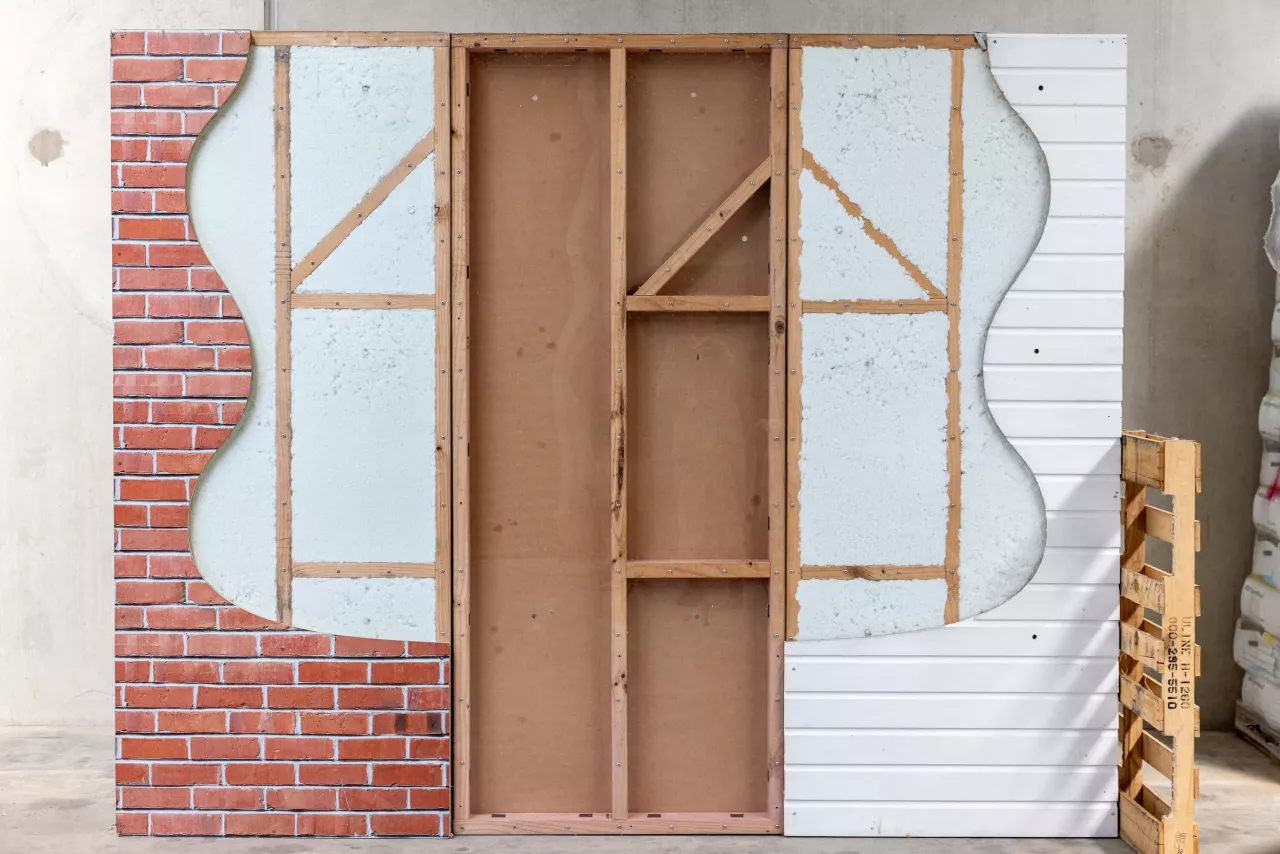
Blown-in insulation has a reputation for settling over time, and that concern isn’t entirely unfounded.
“Blown-in” describes how insulation gets into the wall, not what it’s made of. Different blown-in materials behave very differently once they’re there.
Insulmax®® is a dry mineral fibre installed under pressure. It has an S1 settling rating, the highest class under the European settling standard. S1 means settling is measured at less than 1%, or is too small to measure.
What are the three types of blown-in insulation?
Three quite different materials can be blown or injected into existing walls, and this is where much of the confusion comes from.
Cellulose is shredded paper treated with fire retardant. It was common in older New Zealand ceilings and is still blown into walls overseas, though it’s rarely used in New Zealand walls today. It’s light, and if it’s installed loosely it can compact under its own weight over time, which is where many of the settling stories people read online come from.

Injected foams are installed wet and cure in the wall. As some of them dry they shrink and pull away from the framing, leaving gaps at the edge of each cavity. They’re also difficult to remove.
Dry mineral fibre, which is what Insulmax®® is, is the same recycled-glass fibre that batts are made of, manufactured so it can be pumped at pressure. It contains no water, no glue and no binders, so there’s nothing in it to dry out, shrink or break down.
Why Insulmax® holds its position in the wall
Insulmax®® is installed under pressure and packed into the cavity at a density more than 50% greater than a conventional fibreglass batt. A tightly packed fibre mass supports its own weight; there’s nowhere for it to slump to. The same density is why it stays in place when a weatherboard or a section of plasterboard is removed during a renovation.
What the S1 settling rating means
Blown insulation products are tested for settling under a European standard and given a class from S1 to S5. S1 is the best: settling measured at less than 1%, or too small to measure. Insulmax®® is rated S1, and the density and composition described above are why.
How the fill is checked at installation
Every Insulmax®® install finishes with a thermal imaging check. Uninsulated areas show on the camera as cold, darker patches, so any cavity that isn’t full is visible before the team leaves. That confirms the wall is full on the day; the next section is what one wall looked like nine years on.
What Insulmax® looks like inside a wall after nine years
The S1 rating is laboratory evidence. There is also real-world evidence from a New Zealand home.
Nine years after having Insulmax®® installed, one homeowner needed to replace some weatherboards. The old boards came off the upper part of the wall, exposing the cavities from the top plate down, before the house was wrapped and re-clad in Linea.
The photograph below was taken with the boards off. The mineral fibre is still packed firmly to the top plate in each cavity, including the narrow triangles either side of the diagonal brace, with no gap at the top where settled insulation would have dropped away.
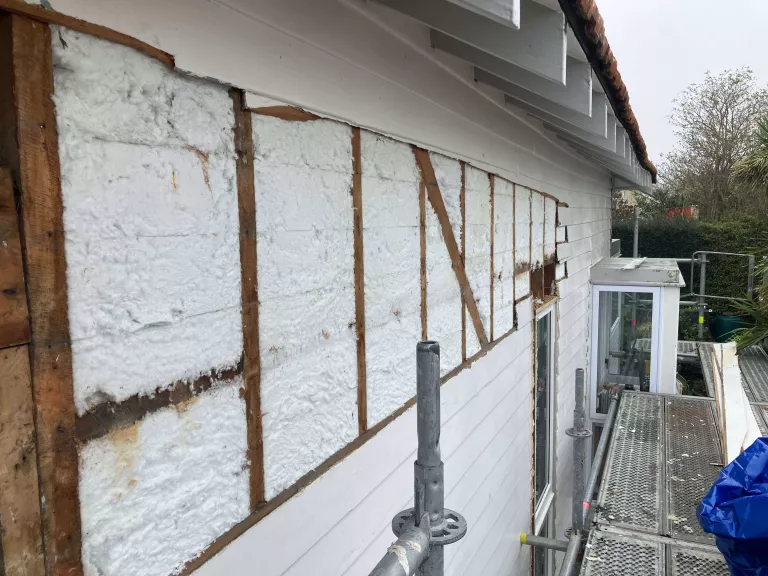
In the homeowner’s words: “All insulation stayed in place when we removed, wrapped and re-clad.”
One caution if you’re planning a renovation. Insulmax®® supports its own weight and stays in place when a weatherboard or a small area of lining is removed, as it did here. If a large area of wall is opened up, some insulation can come away at the edges depending on how much is removed, so exposed insulation should be covered with paper or mesh while the wall is open.
So, will Insulmax® settle in the wall?
Different blown-in products behave differently over time. Insulmax®® is a dry mineral fibre packed at high density and rated S1 for settling. And when one New Zealand installation was exposed nine years later, the insulation was still firmly packed to the top of the wall cavities.
If you have a question about a particular wall, ask it at your free home assessment.
Read more in our Faqs:
Will Insulmax®® settle or shrink over time?
Will Insulmax®® fall out if I renovate?
How do you know the wall is full?