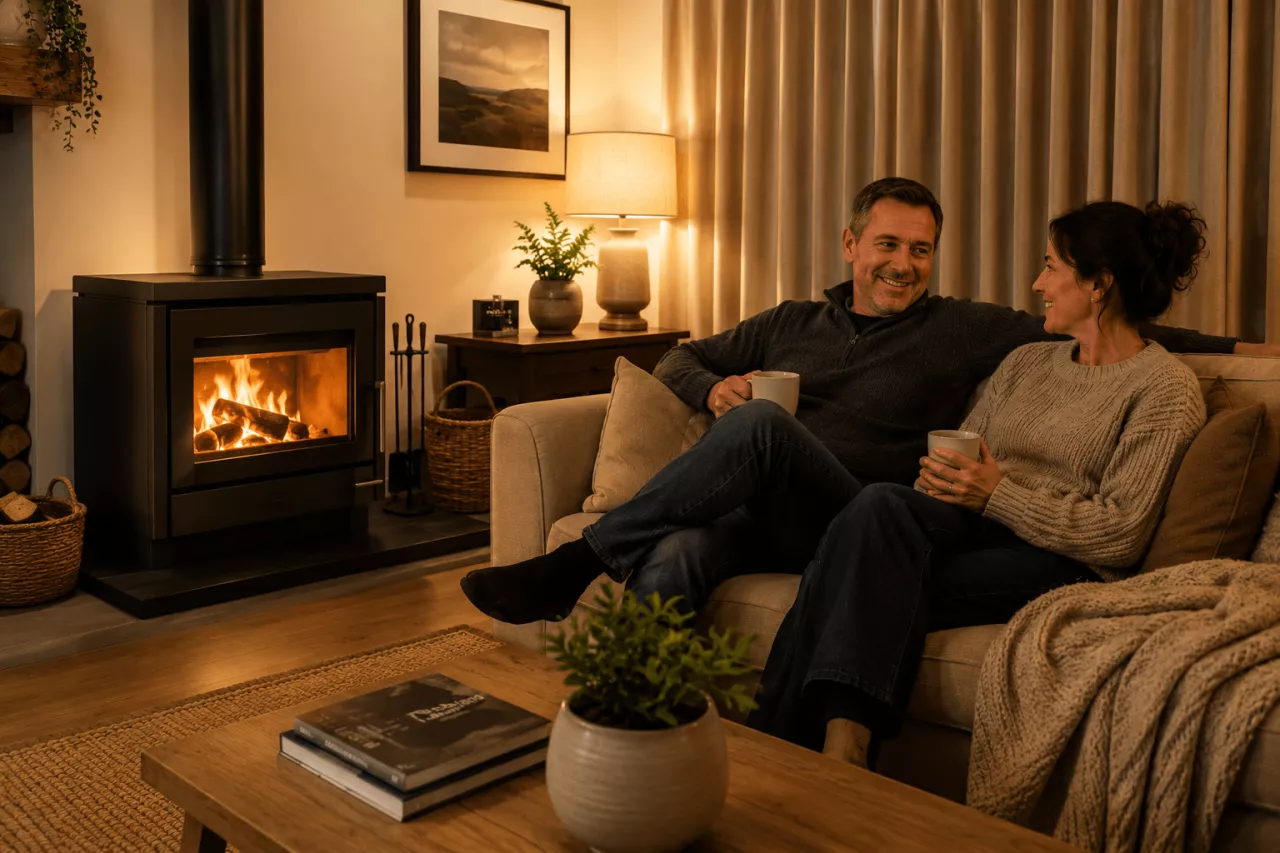
Andrew and his partner live in a sprawling 230-square-metre two-storey home in the Wellington region. As empty-nesters from a blended family, they'd watched plenty of adult children come and go — but the one thing that wouldn't budge in recent years was how cold the house had become.
"We've been here a couple of years now, but it's just the last couple we've really noticed it," Andrew says. The house was a tough one to heat: concrete and battening gib downstairs, no cavities in the floor, no space in the ceiling, and no insulation anywhere. "The last couple of winters have been pretty damn cold."
After seeing an Insulmax® ad on Facebook, Andrew did his homework. The alternative was a nightmare: ripping all the upstairs gib off and starting again. "It's a big house. I couldn't bear the idea of re-gibbing the whole house," he says. He chose an internal install rather than going through the weatherboards. The job was booked pre-Christmas alongside new carpet and a thicker underlay — forward planning that would pay off come winter.
Smart financing
At around $8,000, it wasn't small money, but Andrew structured it cleverly. Working with his bank, he took out a separate 1% good energy loan over three years rather than rolling it into his main mortgage. "The total interest cost was only $90," he says. "The lady from the bank went straight to Insulmax® to get copies of the quotes. They were really good with the communication.
"The final invoice was even lower than the quote, As Insulmax® only charges for the material actually used. As Andrew points out, the alternative would have cost a fortune. "Imagine what a builder would have charged me to whip all the gib off, put that in, then put new gib up, and then I would have had to get a professional plasterer."
Heat-greedy no more
Andrew describes himself as frugal. "I had parents that were quite very frugal. If it was cold, you got another jersey." Even with modest heating habits, the change has been striking.
In previous winters, once the firebox was lit, that was that. "I got heat greedy," he laughs. "As soon as I get home from work, three, four o'clock, it's going until bedtime. We'd stop feeding at about nine." Now the pattern has flipped: "I've got it going at about five. Eat my dinner, chuck another log on once we've finished dinner, and then just go, 'nah, it's too hot.'" One log instead of an evening's worth of firewood, a real saving when, as Andrew puts it, firewood is "pretty expensive."
The heat pump tells the same story. Sitting at a modest 18 to 20 degrees, it now self-regulates and cycles down. "You can hear the fan slow down. It's not working as hard." Combined with new curtains over the older windows, the upstairs lounges, kitchen and dining room hold their warmth, even the back corner that used to be a cold spot.
A fast, tidy install
The team finished in under a day. "They turned up in the morning, and I got home at three in the afternoon, and they were gone. No mess, nothing." Andrew had moved the furniture and vacuumed beforehand, which the installers were genuinely grateful for. "They were like, 'no, we normally get stuck with that — dead flies and dust bunnies everywhere.'"
Worth the warmth
For Andrew and his partner, the pay-off isn't on the power bill — they were always careful with energy. It's comfort. The house finally holds its heat. The fire works smarter, not harder. The heat pump barely breaks a sweat. And come the next biting Wellington winter, their old two-storey will be ready for it.