If you’ve read a New Zealand forum thread about retrofit wall insulation, you’ve probably seen this comment, usually from someone in the trade:
“If the insulation bridges the cavity and touches water, it wicks across and starts wetting your framing.”
It’s a reasonable concern, and for some insulation products it’s correct. Insulmax® doesn’t create that problem because it doesn’t absorb or wick liquid water: it’s treated during manufacture with an inert water repellent. It stays permeable to water vapour, so the wall keeps drying out the way it always has. In 2017 MBIE considered this exact concern in a determination about an Insulmax® install and was satisfied the proposed installation could meet the Building Code, and the product’s CodeMark certificate covers its use in walls with or without building paper.
Why moisture is a concern in older New Zealand walls
Many older homes have no building paper behind the cladding. When wind-driven rain gets past the weatherboards or bricks, it runs down the inside of the cladding and dries out again. The wall works because it can drain and breathe.
Conventional fibreglass batts absorb water and hold it. If you pushed batts into that unlined wall, they’d soak up any water that came in and hold it against the timber. That’s the mechanism behind the objection, and for that product it’s correct.
Why Insulmax® doesn’t absorb or wick water
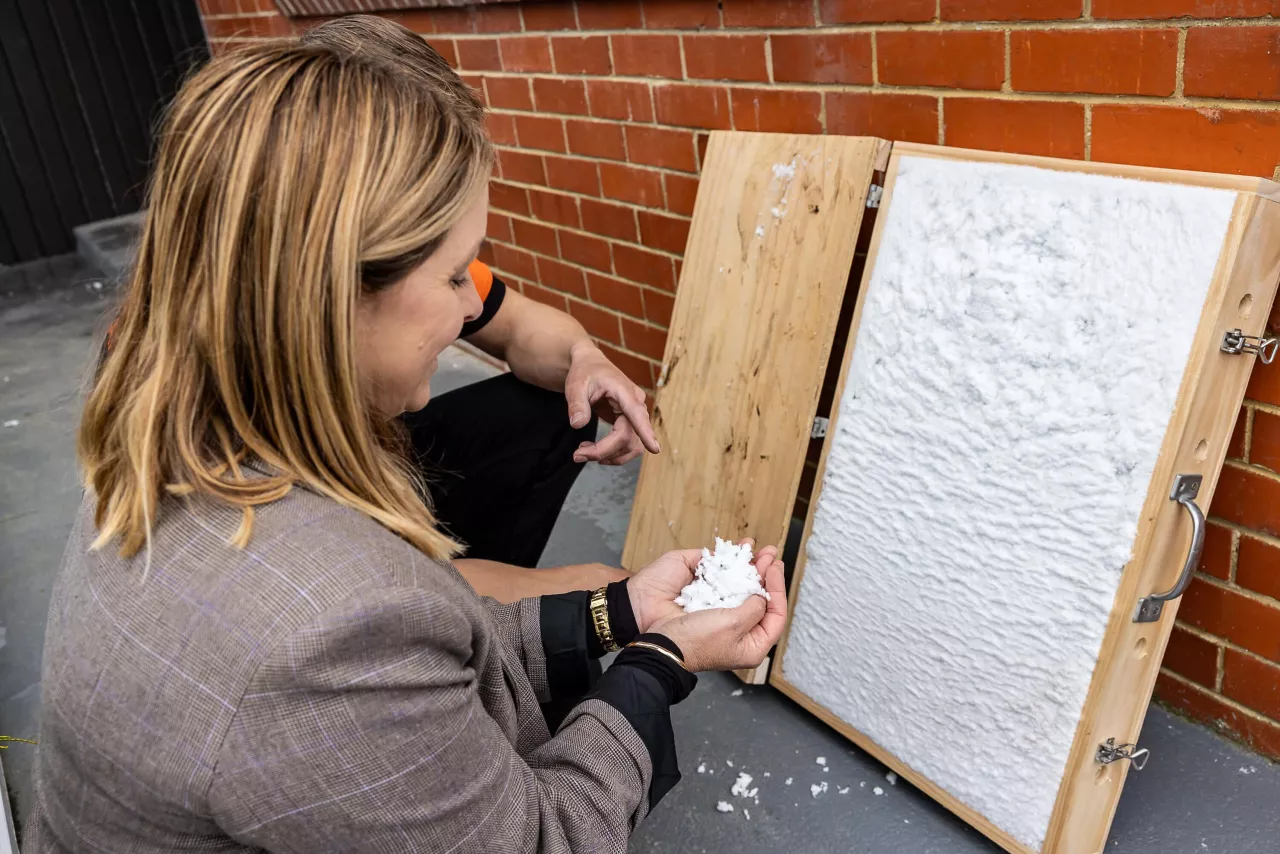
Insulmax® is the same recycled-glass fibre that batts are made of, but during manufacture it’s treated with an inert water repellent. Liquid water doesn’t soak into it and doesn’t travel through it. Water that reaches the insulation runs off it and drains as before.
At the same time, the product has a European classification of negligible resistance to water vapour. Moisture in the air passes through it. So the wall still drains and still breathes; what’s changed is that the cavity is now full of a material that slows the transfer of heat and won’t hold water.
You can check the first half of that yourself. Ask your local Insulmax® representative for a sample and put it in a glass of water. It floats, and it’s still floating weeks later.
What MBIE found about Insulmax® and weathertightness
In 2017, Invercargill City Council refused a building consent for an Insulmax® installation in an existing brick veneer home, primarily because of concerns about weathertightness. The homeowner applied to the Ministry of Business, Innovation and Employment (MBIE) for a determination.
In Determination 2017/028, MBIE examined the proposed Insulmax® installation and the Council’s concerns, including how the insulation would affect moisture within the wall cavity. After considering the evidence, MBIE concluded there were reasonable grounds to be satisfied that the building, following the proposed installation, would comply with the Building Code to the extent required by section 112 of the Building Act. MBIE reversed the Council’s decision to refuse the building consent.
A determination relates to the particular circumstances of the case it was made on, rather than providing blanket approval for every home in New Zealand. However, this determination is significant because the weathertightness concerns associated with installing Insulmax® into an existing brick veneer wall were independently considered by MBIE and, based on the evidence presented, MBIE was satisfied that the proposed installation could meet the required Building Code provisions.
What the Insulmax® CodeMark certificate covers
Insulmax® holds CodeMark certificate CMNZ70028, listed on MBIE’s Building CodeHub register. CodeMark is New Zealand’s product certification scheme for Building Code compliance. When a certified product is used within the scope of its certificate, councils are required to accept the certificate as evidence that it complies.
The scope of Insulmax®’s certificate covers retrofitting into existing walls with timber cladding, brick and masonry veneer, plaster, fibre cement and double brick, with or without building paper.
So, will Insulmax® wick moisture into the framing?
The concern describes what happens when an absorbent insulation is put into a wall that relies on draining and drying. Insulmax® doesn’t absorb or wick water and stays vapour-permeable, so the wall keeps doing both. MBIE considered the concern in its 2017 determination and was satisfied the proposed installation could meet the Building Code, and the product is CodeMark certified for use in walls with or without building paper.
If your walls have a particular history, an old leak, a cladding you’re unsure about, a section that’s been repaired, mention it at your free home assessment. Your local Insulmax® representative will look at the wall before anything is installed.
Read more
My house doesn’t have building paper – is Insulmax® suitable?
What about the cavity in brick homes?