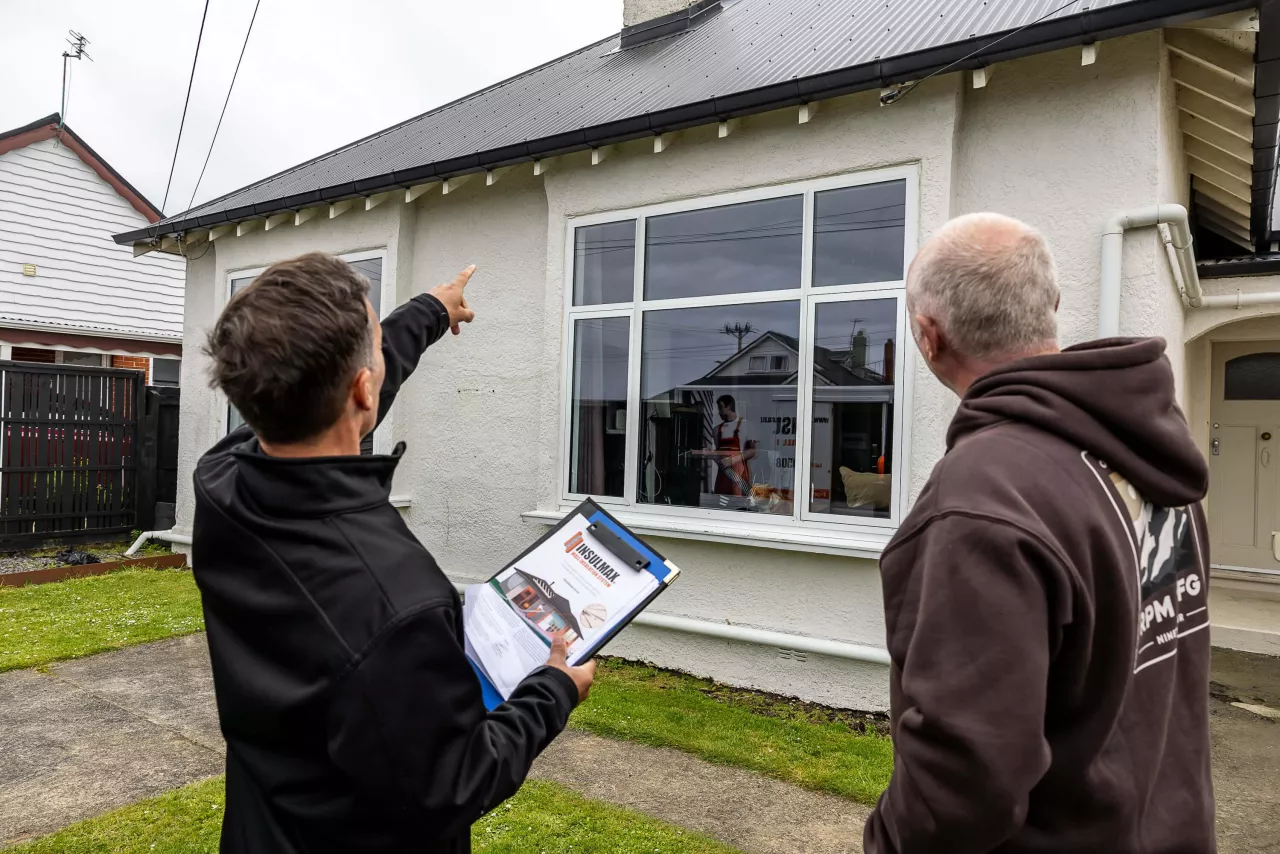
People put off wall insulation for years over a doubt they can’t check themselves. “There’s no building paper.” “It’s brick, so there’s a cavity to keep dry.” “The wiring’s old.”
If your external walls have an accessible cavity, your house is often suitable for retrofit wall insulation. Weatherboard, fibre cement, plaster and roughcast homes, brick veneer and double brick can all be suitable. Solid timber homes such as Lockwood, Fraemohs and log houses are not, because there’s no wall cavity to fill.
Missing building paper, older wiring, asbestos cladding or a known leak don’t all mean the house is unsuitable, but they can change how the job should be approached. This page helps you work out whether your house is likely to be suitable. The final call depends on the actual wall construction and condition, which your Insulmax® representative confirms at a free home assessment.
Which New Zealand wall types are suitable for retrofit wall insulation?
Almost every New Zealand house built before the mid-1980s has one of these wall types.
Timber framing with weatherboard, fibre cement or plaster cladding is the most common older house, with hollow cavities between the studs. Suitable.
Brick veneer over timber framing has bricks on the outside, a cavity, then timber framing and plasterboard inside. Suitable; the install goes through the mortar joints or the interior lining.
Double brick has two skins of brick with a cavity between and no timber framing. Suitable.
Solid timber (Lockwood, Fraemohs, log homes) has no cavity. Blown-in insulation isn’t an option for these homes.
Not sure which you have? Tap the wall inside. A hollow sound usually means a cavity.
Can you check whether your wall cavity is empty yourself?
A quick check around a power point or light switch can sometimes give you a clue about what’s inside the wall. It isn’t a definitive suitability test, but you may be able to see whether the cavity appears empty, has building paper, or already contains insulation.
Turn off the power at the board and remove the cover plate from a power point on an external wall. Looking into the gap around the box with a torch, you might see empty space and the back of the cladding (no paper, no insulation), a sheet of paper or foil (building paper), or fibre or foam (the wall already has insulation, so don’t add to it). Put the cover back on and turn the power on. Whatever you see, your local property assessor will check it properly at the free home assessment.
Can Insulmax® be installed if there’s no building paper?
Yes. Insulmax® is certified for use in walls with or without building paper, because the fibre is treated to repel liquid water and doesn’t wick. The building paper FAQ explains why in full, and the moisture article has the evidence.
Can brick veneer walls be retrofitted with insulation?
Yes, subject to assessment. The cavity behind the bricks is filled through the mortar joints or from the inside. How moisture is managed in a filled brick cavity is covered in the brick cavity FAQ.
Can retrofit wall insulation be installed around electrical wiring?
Yes. Insulmax® has no effect on TPS wiring, the plastic-sheathed cable used since the 1970s. Older rubber-sheathed wiring should be replaced before any wall insulation is installed. The electrical cables FAQ has the detail.
Can Insulmax® be installed in a house with asbestos cladding?
Yes. The approach depends on the home, and your local representative will confirm the best one at the free home assessment. If you’re unsure whether your cladding contains asbestos, have it tested before any work on the house.
How are dwangs, nogs and bracing found and filled?
Every cavity between the framing is found and filled separately. Insulmax® uses a variety of techniques to find the cavities formed by these timbers, including high-resolution thermal imaging, and thermal imaging confirms the fill afterwards. The cavities FAQ shows what that looks like.
Can wall insulation be installed if the wall has a leak?
Not until the leak is fixed. Insulation isn’t a fix for a leak, and it shouldn’t go into a wall that’s wet from a known fault. Once the fault is repaired, the wall can be assessed. What happens if a pipe fails after installation is covered in the pipe leak FAQ.
When is relining a better option than blown-in wall insulation?
If you’re already planning to strip the plasterboard for a full renovation, conventional insulation with building paper pockets becomes an option, because the wall is open anyway. For a house you’re living in, with walls you want to keep, blown-in insulation avoids the demolition, the disruption and the skip.
What does the property assessor check at a home assessment?
If your walls have a cavity, the next step is a free home assessment. Your local Insulmax® property assessor measures the cavity depth, checks the wall type and condition, confirms suitability and tells you what the finished wall will achieve. Then you have a real number for your house.
Read more
Is my home suitable for the Insulmax® wall insulation process?
My house doesn’t have building paper – is Insulmax® suitable?
Does your product affect electrical cables?
What happens if a pipe leaks in my walls?
Do I need a building consent for wall insulation, and who arranges it?